


Back to how it works
Technology partner · PPC Australia

Capture at the kerb line. Two inlets, one job.

The TNS takes water in through two precast permeable-concrete products made by PPC Australia – the EnviroKerb Frequent Flow Inlet (EFFI) for the frequent, low-intensity flows, and the fully porous EnviroKerb High Flow Inlet for the larger events. The number of each is calculated from the micro-catchment runoff calculations.

PPC Australia EnviroKerb

EnviroKerb is a product of PPC Australia Pty Ltd (ABN 28 642 804 573).

The inlets

One takes the everyday rain. One takes the storm.

Both replace conventional kerb and channel, and both are interchangeable via cast-in threaded lifting sleeves – so a unit can be lifted out and swapped without breaking out the kerb line.

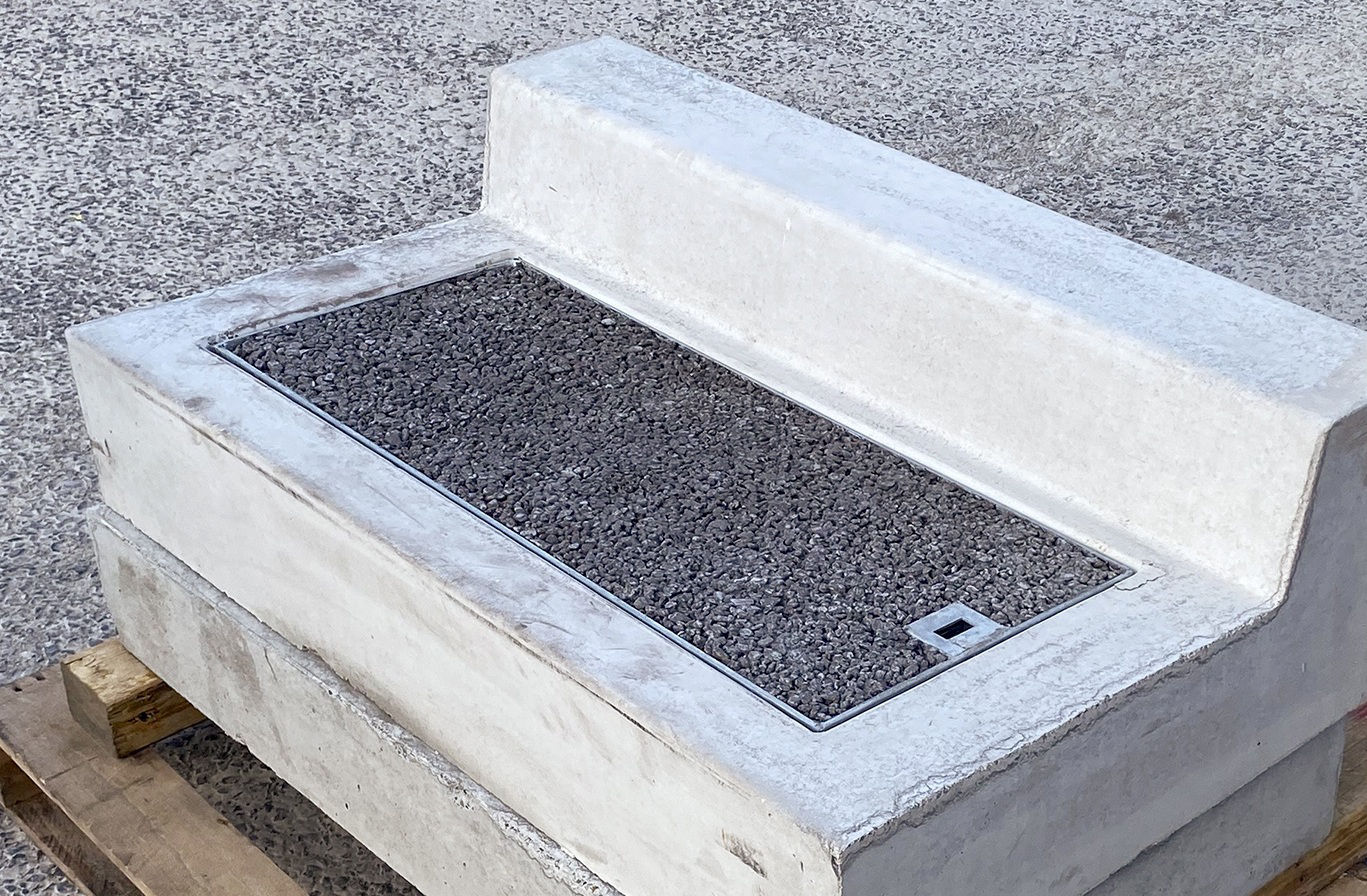
EFFI unit on a pallet – precast concrete kerb body with a galvanised steel tray filled with permeable concrete, set on a precast water ramp
Upstream · frequent flows

EFFI – EnviroKerb Frequent Flow Inlet

A precast kerb and channel inlet with a built-in galvanised steel tray filled with permeable concrete, integrated within the kerb and set on a precast concrete water ramp that directs surface water towards the back of the kerb.

  • Intercepts low-intensity flows at the kerb line – the flows that make up most of the annual runoff volume.
  • A load-bearing permeable aggregate enclosed in an engineered frame, Class D rated and fully trafficable.
  • Coarse and fine surface material is retained in the tray rather than carried downstream (PPC Australia).
  • The tray lifts out via a standard Gatic locator cast into it – cleaned or replaced in minutes.
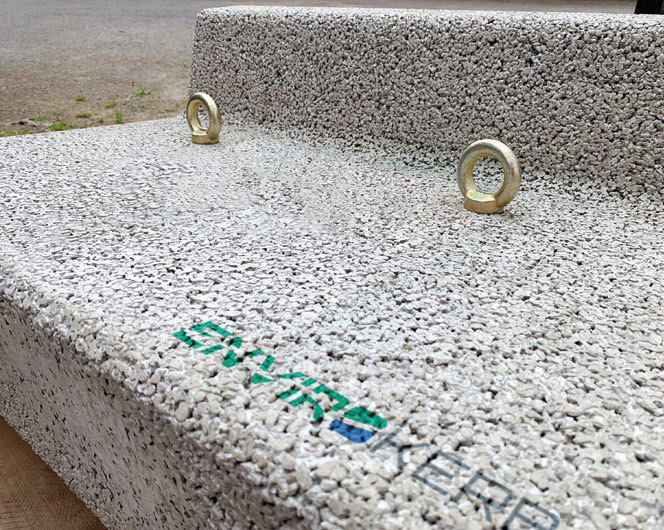
Close-up of the fully porous EnviroKerb permeable concrete kerb with cast-in threaded lifting sleeves
Downstream · high flows

EnviroKerb High Flow Inlet

A fully porous precast kerb made from PPC Australia's patented permeable concrete formula. It sits immediately downgradient of the EFFI, over its own precast water ramp that deflects flow away from the pavement subgrade.

  • Accepts water across the whole kerb face rather than at a single point.
  • Precast kerb body 1200 × 600 mm, with a 900 × 235 mm throat opening.
  • Interchangeable via cast-in threaded lifting sleeves.
  • Serviced with conventional street sweeper and vacuum truck methods – nothing proprietary to maintain.

How they work together. The EFFI sits upstream to take the frequent, low-intensity flows, with fully porous EnviroKerb High Flow Inlets downstream, adjacent to it, taking the larger events. In the TNS, an ARI Water Filter beneath the EFFI tray protects the void structure from fines and is replaced by removal.

On site

Both inlets, under flow.

EFFI – frequent flow capture. A removable galvanised tray, Class D rated, placed upstream to take the frequent, low-intensity flows.
EnviroKerb High Flow Inlet. The fully porous kerb sits downstream, adjacent to the EFFI, to admit the larger events.
EFFI · technical data

Specifications, weights and water flow rates.

Manufacturer data, PPC Australia. Confirm current figures against the product brochure before specifying.

Precast concrete kerb body

EFFI and High Flow Inlet

Length
1200 mm
Width
600 mm
Channel thickness
200 mm
Throat opening
900 × 235 mm
Weight
~230 kg

Tray insert

Galvanised steel, permeable concrete fill

Tray
990 × 350 × 50 mm
Lifting locator
Standard Gatic
Load rating
Class D
Weight
~23 kg

Precast concrete water ramp

Deflects flow away from the subgrade

Length
995 mm
Width
595 mm
Height
200 mm
Lifting threads
Cast-in M16
Weight
~200 kg
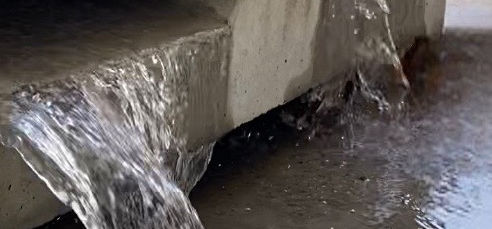
Water flowing through the permeable kerb face during a test
Water flow rate
500mm / min

Inflow capacity of up to 500 mm per minute – roughly 30,000 mm/hr – for the permeable concrete formula, tested to ASTM 1701 (PPC Australia). TNS hydrologic and hydraulic performance is designed and assessed against QUDM.

Recycled aggregate. The precast concrete body and water ramp can incorporate up to 20% recycled plastics as a replacement for mined aggregate. The tray insert aggregate can also include up to 20% repurposed soil material as an aggregate replacement. PPC Australia also cites enviro-friendly blended cement and recycled golf-ball aggregate in the EnviroKerb range.

The EnviroKerb range

Any kerb profile, plus made-to-measure.

EnviroKerb can be installed as a standalone item in any profile to replace traditional concrete kerb and channel, or used in conjunction with structural soil cells to form the below-ground retention the TNS is built on.

Profiles

Manufactured to match the kerb profile the road already uses, so the streetscape reads as normal kerb and channel.

  • Barrier kerb and channel
  • Spoon drain
  • Roll-over kerb and channel
  • Flat slab
  • Made to measure

Maintenance

Conventional street sweeper and vacuum truck methods, programmed into a council's existing maintenance rounds. On the TNS, watermatters.ai units measure flow against a calibrated baseline, so a drop flags an inspection before it becomes a blockage.

Applications

Wherever runoff currently leaves a hard surface faster than the vegetation beside it can use.

  • Roads, car parks, hardstand
  • Street tree and nature strip
  • Public open space
  • Retrofit of existing kerb

Retrofit

Because units are interchangeable via cast-in lifting sleeves, an existing kerb run can be opened, an inlet dropped in, and the run closed again – no redesign of the surface network.

“EnviroKerb technology aims to reverse the way water is handled in our streets – capturing it at the source and returning it to the trees, gardens and green spaces that make our cities liveable.”

Martin Cook · Director, PPC Australia
In the system

Where the inlets sit in the TNS.

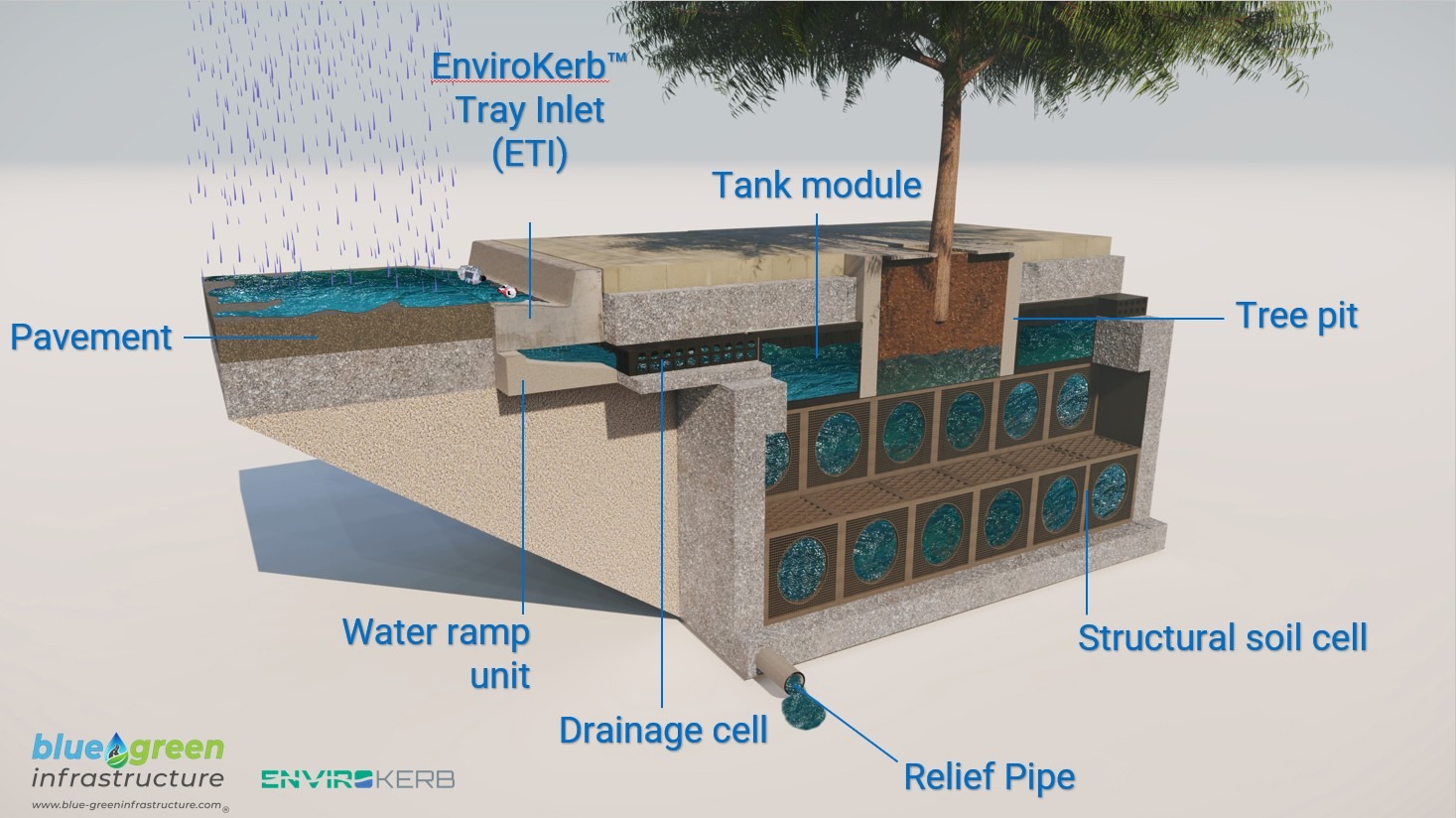
The inlets are the entry point. Everything downstream of them – water ramp, drainage cell, tank module, structural soil cells and tree pit – is the retention and storage asset.

Labelled cutaway of the TNS – pavement, EnviroKerb, water ramp unit, Rainsmart Nero Pave cell, tank module, Terravault structural soil cells and tree pit

Labelled cutaway: rain enters at the kerb line, passes the water ramp unit into the drainage cell and tank module, then down through the structural soil cells to the tree root zone. A small relief pipe at the base engages only once the connected systems have filled and the substrate is fully saturated.

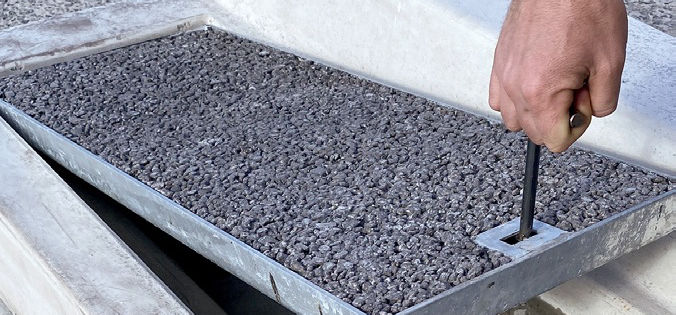
A hand lifting the galvanised tray out of the EFFI body using the cast-in Gatic locator
Serviceability

The tray lifts straight out.

The access locator is cast into the galvanised steel tray, so cleaning and replacement is a lift-out operation – not a break-out.

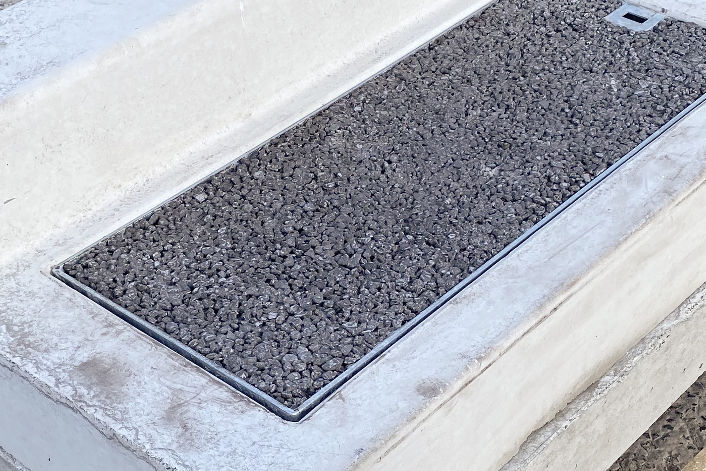
Top view of the EFFI tray set flush into the precast kerb body
In the kerb line

Flush, trafficable, unremarkable.

The tray sits flush in the channel and carries a Class D load rating, so the inlet behaves like the kerb and channel either side of it.

Product brochures

Attribution and scope. EnviroKerb and the EFFI are products of PPC Australia Pty Ltd; the brochures above are PPC Australia's own publications and the product data in them is theirs. BGI specifies these inlets as the entry point to the TNS and makes no stormwater quality claim for the TNS – where a project carries stormwater quality obligations, those are met by separate, appropriately certified measures. An updated EnviroKerb High Flow Inlet brochure will be added here when PPC Australia releases it.

Specify the inlets

Tell us the catchment. We'll tell you the count.

The number of EFFI and High Flow Inlet units is calculated from the micro-catchment runoff for each node – not assumed. Send us the site and we'll size it.

Book a technical chat